
Case Study: Brakes? That’s for the Weak


We’ve recently launched our Case Study series with a story of success.
Now, it’s about time to walk through a not-so-fortunate trade. And here we go again on gold. Both stories started on the same date (October 13, 2025) but ended up differently.
Trade objective: Capitalize on a short-term opportunity driven by the XAUUSD upward move.
Market background
Gold traded near $4,070 by October 13 as speculative interest remained elevated.
Client action
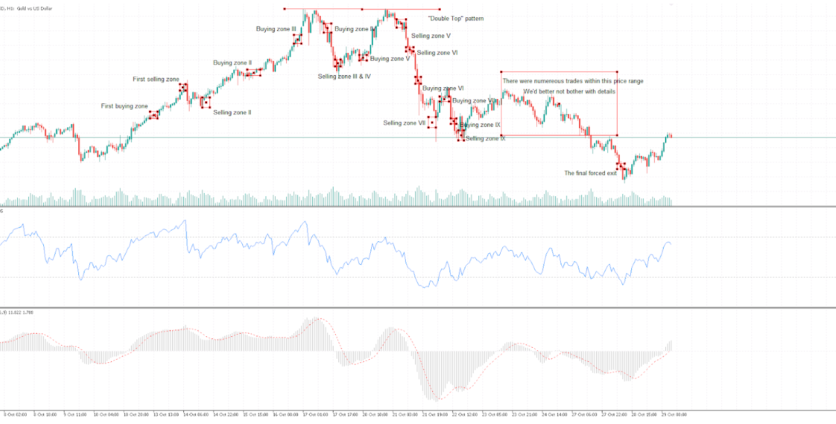
The trader entered the first buying zone at ~$4,070 and gained profit-taking at ~$4,150 the next day. Hours later, the price corrected, and he sold at ~$4,110. But something went wrong…
Market movement
Mid-October went on with the continued buying, pushing prices to an all-time high $4,379. The US CPI release (24.10) caused intraday reprices: Traders who were long without risk controls had to digest quick reversals. By October 27, the correction accelerated: Spot levels were in the high $3,800s, a material drawdown from the peaks.
Client behavior
To cut the story short, over the following two weeks, the trader had been executing random trades without Stop-Loss or Take-Profit orders placed. Nor were there the signs of a coherent strategy. Conversely, the disregard for price action pattern (“double top”) along with leverage misuse were visibly witnessed, as the client continued buying the dips through the downward gold direction in hopes of capitalizing on gains.
Results
The entries were emotional (FOMO, breakout chase), the absence of Stop-Losses, the disregard for the macro calendar, leverage and size misuses – it all led to the final forced exits. It visualizes how the lack of Stop-Loss and strategy reveals progressively deeper losses as prices correct. Finally, the closed P&L of -$49,232 speaks for itself best.
Conclusion
Between October 13 and 27, 2025, gold moved from an elevated, speculative environment into a sharp correction as positioning and data flows changed. Traders who operated sizes without a clear strategy or risk controls suffered drawdowns when profit-taking.
So, here’s the checklist to avoid repeat failures:
- Define your trade plan prior to entry
- Set Stop-Loss and Take-Profit levels
- Size positions to limit downside
- Respect the macrocalendar
- Read the action price patterns
- Avoid buying extreme breakouts without confirmation
- Have an exit plan for fast volatility


